Families need practical guidance,
emotional steadiness, communication strategies, and the reassurance that they are not
alone. The following references are offered as a starting point for mothers, caregivers,
peer-support groups, and family advocates.
New addition reviewed by Kathleen Mochnacki
Family Caregiving in Mental Illness
An excellent book that I have read is Family Caregiving in Mental Illness by Harriet P. Lefley. It was written in 1996 but is very relevant to the situation today, as nothing appears to have changed. It is written by a social worker who is sympathetic to the plight of family caregivers. There is a chart in there that appears to represent the whole picture including Iatrogenesis.
— Harriet P. Lefley
New additions reviewed by Susan Inman
Four books and one article recommended for further reading. Select a title to open the linked resource.
Our Thirty Year Caregiving Struggle Inadequate Schizophrenia Treatment and How to Improve it
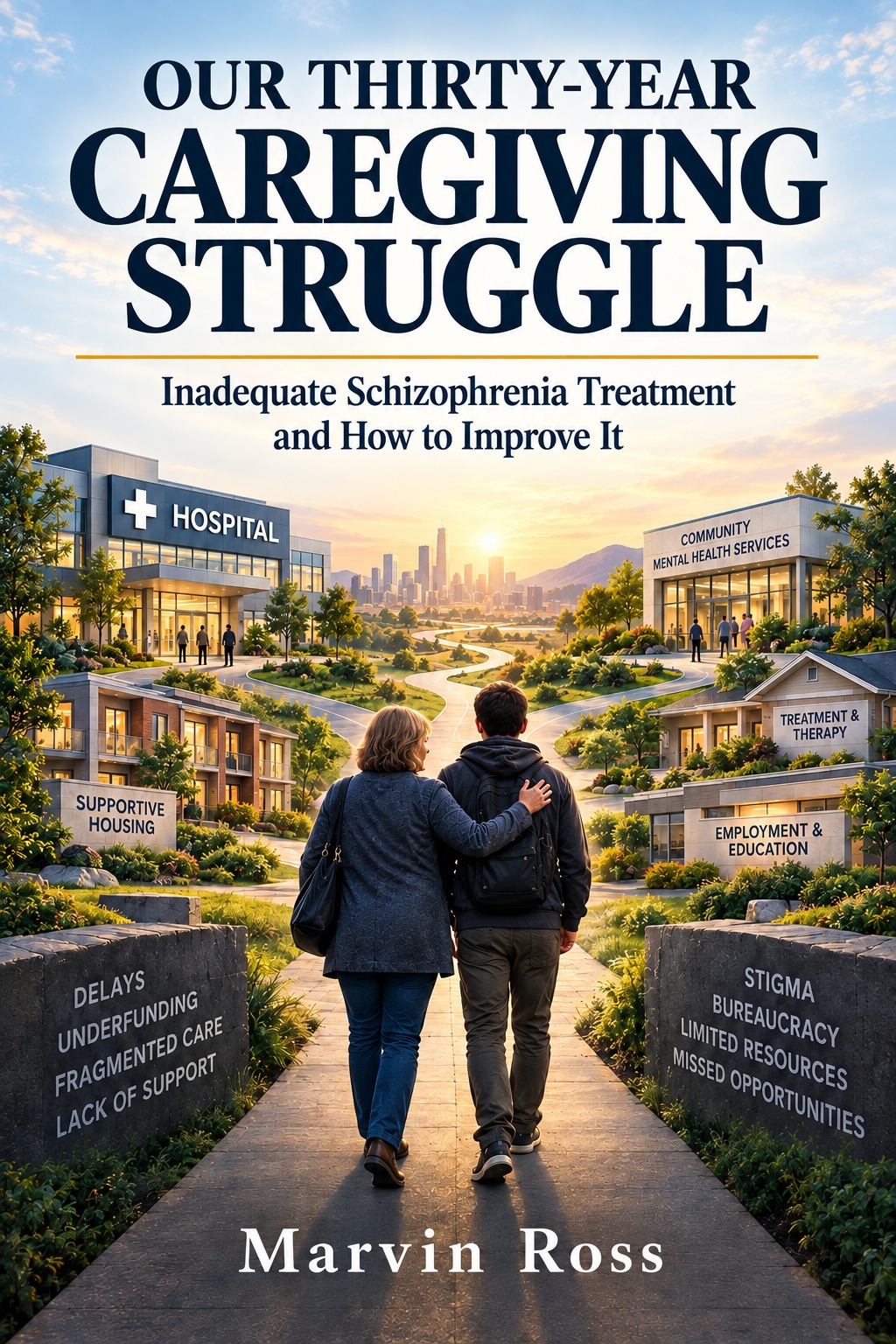
Marvin Ross
In North America a large proportion of people with schizophrenai and other psychotic illnesses end up homeless on the streets or in jail while a smaller number do manage to cope and do well. Families are torn apart emotionally, physically and financially if they can hang on and not abandon their kids. This book describes how caregivers cope despite inadequate societal resources and why the North American system is so deficient.
Marvin Ross is a Dundas, Ontario writer and publisher with a particular interest in mental health and chronic pain. Dr E Fuller Torrey, in his latest edition of the classic Understanding Schizophrenia A Manual For Families, called Mr Ross "one of the leading Canadian advocates for individuals with serious psychiatric disorders"
Patrick William Kelly
Patrick Kelly's weekly column "Minds at War" in Psychology Today, is about mental illness, psychiatry, and recovery from the inside—including anosognosia, the limits of the medical model, and the role of connection in getting well.
Patrick says: "Writing about my tragic experience is my own form of advocacy. I spent a long time inside an illness that no one around me had the tools or the permission to name, and when I came out the other side, the thing I most wanted to do was make sure other families didn't have to navigate that same darkness without a map".
Patrick William Kelly
A recent personal essay called "Awkward Intimacy," published in
The Rumpus
, explores a different dimension of what illness and recovery look like up close.
Susan Inman
Susan Inman's memoir describes her family's nine year journey to help her younger daughter recover from a catastrophic schizoaffective disorder. "Highly recommended" by Dr. E. Fuller Torrey author of Surviving Schizophrenia and described by him as "...one of the best accounts I have read of serious mental illness as told by a mother."
Susan Inman lives in Vancouver and is the best selling author of "After Her Brain Broke".
E. Fuller Torrey
A widely respected family handbook explaining schizophrenia, treatment, relapse, medications, lack of insight, and the realities faced by families.
Xavier Amador
A practical guide for families whose loved one refuses treatment or does not believe they are ill. It introduces the LEAP approach.
Rebecca Woolis
A compassionate guide for families living with mental illness in someone they love, including communication, boundaries, and caregiver survival.
Robert Kolker
A narrative nonfiction account of one family’s experience with schizophrenia, family life, stigma, research, and resilience.
Linea Johnson and Cinda Johnson
A mother-daughter memoir about bipolar disorder, told from both the caregiver’s perspective and the perspective of the person living with illness.